
If you are new to trip leading and would like extra support, please talk to a committee member about having a more experienced leader join your trip as a ‘mentor’. Your mentor can also help you with planning and organising.
 Planning a trip
- If you are new to leading, it’s a good idea to plan a trip in an area you are familiar with. If you have not done the route before, consider talking to another tramper who has been there.
- Use Topomaps to plan your route. All the New Zealand Topomaps are available free online at this website: topomap.co.nz. NZtopo50 is also a great app that can be downloaded for a small price.
- As well as your primary route, consider alternative options or ‘escape routes’ should any issues arise e.g. an injury in the party, unexpected weather change, or route impassable for some reason.
- Determine the grading for the trip based on the hardest day on your Trip taking into account the distance, climb, walking time, quality of track and overnight pack to measure the trip difficulty. See the Trip Grading Calculator on the website (Users - Trip Leaders – Trip Grading Calculator).
https://live.nelsontrampingclub.org.nz/club-members/trips/trip-grading-calulator
You can also look up the historic grading on the tab at the bottom of the spreadsheet and shareOnly the grading of your new trip in the last tab in the spreadsheet. - Determine the travel distance to and from the start – end of the tramp. Look at the Vehicle Distances for common destinations (See Trip Info - Vehicle Distances for common destinations on the website) or use google maps to check the trip distance for a there and return trip. Use the Transport Cost Calculator on the website (Users - Trip Leaders - Transport Cost Calculator) to determine the transport cost per participant. https://live.nelsontrampingclub.org.nz/club-members/trips/jevents-scale
- Check Department of Conservation (DOC) and other relevant websites for further information, including any current hazards or closures in the area. If your trip crosses private land, you may need to contact the landowner to ask permission. Also check that all roads are open to get to the start of your trip. Consider phoning the relevant DOC office if further information is required.
- You may also wish to check out some of the other resources on the Nelson Tramping Club website e.g. the Mountain Safety Council Bushcraft Manual under Trip Info/ Trampers Toolbox: MSC Bushcraft Manual
 Putting your trip on the website and getting registrations
- Ensure you have a leader’s login. If you are new to leading trips, you may need to ask Debbie Hogan to update your login (email:
This email address is being protected from spambots. You need JavaScript enabled to view it. ). - Put your trip up on the website. See Help Article NTC Website for Trip Leaders (basic) for instructions on how to do this (log into the website, then go to the Home tab/Help articles).
- Prospective participants can register online (including non-members). They may also call or email you. As the leader, you have the right to turn people away and remove them from the list if you feel they will not be able to manage the trip. Trampers under age 16 or with a disability must have a “Caregiver” over 20 who accepts responsibility for them. It’s a good idea to contact new people to find out a bit more about their tramping experience, particularly recent tramping experience, especially for longer or more challenging trips. You can also talk to other club members who have tramped with them before.
- The website should send you an automated email when people register, but it’s also a good idea to keep an eye on your trip list on the ‘View Trip Bookings’ page of the website. (Instructions are in the Help Article NTC Website for Trip Leaders).
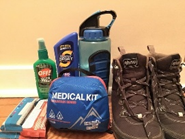 Organising things before the trip
- Ensure you have a map to take with you which covers your route and any alternative routes (printed and/or accessible offline on your phone), as well as GPS and/or compass.
- Keep an eye on the weather forecast for the relevant area (useful websites include Met Service Mountains & Parks , MetVuw and YR).
- You decide (possibly in consultation with others) if the trip has to be cancelled because of weather or other circumstances.
- Contact participants several days before the trip to inform them of the arrangements, including meeting time and place, transport arrangements, information about the route, and things they need to bring (consider directing them to the What to Take page under ‘Trip Info’ on the NTC website). Remind them of the need for any particular items required for your trip e.g. hut tickets, tents, ice axe and crampons. Ask if anyone has medical conditions that you should be told of confidentially. A group email is often the best way to contact everyone.
- Organise transport in conjunction with your participants. Usual meeting points are Richmond Badminton Hall or the Cathedral Steps, often at 8am, but this can be varied to suit your trip. Normally you will arrange carpooling (in as few vehicles as possible) from the designated meeting point. Participants should have indicated as part of the registration process if they are able to provide a vehicle. Participants are expected to get themselves to the meeting point, but you may be able to help, especially on overnight trips.
- Nominate an Emergency Contact Person, and enter their details on your trip creation page. This is a person who will expect to hear from you when you come out of the trip and will raise the alarm if you are overdue. It could be someone in your household, or another club member or friend. Give them a copy of the Intentions form (printed or email). Make sure you let them know when you are safely out after the trip.
- You MUST take a PLB on all club trips. It is recommended that a club PLB be taken, even if you and other participants are carrying personal PLBs. This is because it is linked to club emergency contacts, and the club will arrange for it to be reset if it is used. When there are four or more people on the trip, it is recommended to take two club PLBs in case the group decides to separate for any reason. Club PLBs can be obtained from Kate Krawczyk Txt: 0272460185 or Chris Louth
This email address is being protected from spambots. You need JavaScript enabled to view it. . Enter the PLB number onto your trip creation page. Activation of the PLB is at the discretion of the leader. PLBs should be returned within two days of the completion of your trip.
- Once registrations are closed and arrangements finalised, check that you have completed all relevant details on your trip creation page.
- Now bring up your Intentions Form and check that everything is correct. Print a copy to take with you. Also email a PDF of the Intentions Form to Pat Holland
This email address is being protected from spambots. You need JavaScript enabled to view it. , Debbie HoganThis email address is being protected from spambots. You need JavaScript enabled to view it. Chris LouthThis email address is being protected from spambots. You need JavaScript enabled to view it. and Kath BallantineThis email address is being protected from spambots. You need JavaScript enabled to view it. before leaving. They are the SAR contacts in case of emergency.
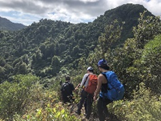 During the trip
- At the carpark or the roadend, introduce the members to each other, explain the route and show on a map. Emphasise that each person has “Personal Responsibility” for their own welfare. You may wish to illustrate any particular tramping skills relevant to your trip, or get an experienced party member to do it, as part of ongoing training.
- Collect the designated travel fee from each passenger and divide it equally among the drivers (or ask a deputy to do this). It’s a good idea to ask everyone to bring cash in exact change.
- Make sure your group are clear about the plan for the walk, e.g. how often you plan to have breaks, whether you want people to remain within sight or wait at certain points, what to do at intersections, plans for any higher risk parts of the walk e.g. river crossings, off-track sections. These plans will vary depending on the size and experience level of the group. Be mindful of the needs of new or less experienced members.
- For a larger party, appoint an experienced tramper as “tail-end Charlie” during the trip. This person should ensure that no-one is behind them.
- Check in with your group members regularly to make sure everyone is doing OK. Know how many people you have and ensure that all members are present, particularly in a larger group!
- It is generally best to keep the group together as much as possible. If you do choose to split the group for any reason, ensure that both parties have a designated leader, a clear plan, and a PLB.
- If anyone requests to leave the group and take a different route, ensure they are aware that if they do so they are no longer on a ‘club trip’ and will need to take responsibility for themselves.
- Know what your contingency plans for the group are if things don’t go to plan e.g. turning back early or taking a shorter/easier alternative route if needed.
- When you get back to the cars, contact your Emergency Contract Person to tell them the group is safely off the mountain and close the safety loop.
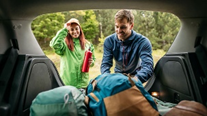 After the trip
- After your tramp has run (or been cancelled), complete the ‘sign-off’ tab on the website. Change the event status to ‘completed’, ‘cancelled’, or ‘postponed’. If the trip was completed, enter the number of visitors (non-club members), and the total number of participants.
- Return the club PLBs to Kate or Chris within two days of completing your trip.
- If permission has been obtained to cross private land, advise the club secretary on
This email address is being protected from spambots. You need JavaScript enabled to view it. so that they can send a club email/letter thanking the landowner. - Write a short trip report (or ask for a volunteer from your group to do this). Whoever writes it should send it to Rich Field on
This email address is being protected from spambots. You need JavaScript enabled to view it. to be loaded to the website. Include a few photos if possible. - If you have non-members who have now completed two or more club tramps, consider encouraging them to submit a membership application.
Congratulations, you’re done! Thank you very much for leading!!
A note on pop-up trips
Definition: Pop-Up or Short Notice trips are tramps that are posted at short notice, often less than 3-4 days before the due date. They can occur for two reasons:
1. A Change to a Tramp Posted on the Club Calendar: Weather conditions including road and track access may require a short-notice change to a listed tramp. This should be done by the Trip Leader editing the Club Calendar, and notifying any registrants. Any such short-notice change could be circulated to the Club membership.
2. Ad Hoc Tramps: Favourable weather or other circumstances can create an unexpected opportunity to visit a location or undertake a tramp that requires special conditions. Such short-notice trips may clash with the activity as listed in the Club Calendar. Organisers of such ‘Pop-Up’ trips should contact the listed Trip Leader to discuss the possibility of a change to the Calendar. If the trip goes ahead as a club trip, all the usual safety procedures must be followed (posted on the club website, completion of an Intentions Form through the website, and taking a PLB, preferably a club one).
If it is not suitable to run the pop-up trip as a club trip, organisers may consider advertising a private trip. This can be done by posting on the Club Facebook page plus direct contact with likely interested participants/ Club members. It should be made clear that it is a private and not a club trip. These trips cannot be circulated via the Club membership. Organisers are strongly encouraged to leave clear intentions with a trusted person and take a PLB. Club PLBs may be borrowed if available. If you borrow a club PLB for a private trip, we ask that you let at least one of the club intentions contacts know where you are going.
If you need any help or information at any stage, please don’t hesitate to contact a committee member or experienced leader.
If you'd prefer to read this in PDF format click here